


Biographies

Ven. Lama Tenzin Jottotshang
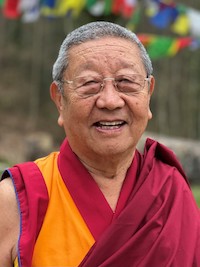 The Ven. Lama Tenzin Jottotshang, Gelug, was born in Lhasa in 1942. During his years of schooling he was educated in Tibetan script and calligraphy. Afterwards he joined Sera Monastery and studied Buddhist philosophy. In 1959 he left Tibet and went into exile in Buxar/North India, where he continued his studies and taught Tibetan script and grammar to the monks. Together with three other monks and upon the wish of the Dalai Lama, he accompanied the first Abbot of the monastic Tibet Institute, Geshe Ugyen Tseten to Switzerland in 1967. He acts as representative of the monastic community in the Tibetan community of Switzerland since its foundation in 1973. From 1980 to 1982 he was director of the Tibet Office in Switzerland and in 1990 he was part of the election commission for Tibetan Members of Parliament in Europe. Since 2001 he represents the monastic community in the foundation committee. For 37 years he taught Tibetan language, script, religion and history in the Tibetan school in Rikon. He is author of the modern German-Tibetan textbook, which appeared in its 3rd edition in 2003 and is very popular. Up until today he continues teaching Buddhism and Tibetan language to Tibetan and Western students.
Ven. Lama Gendün Gyatso
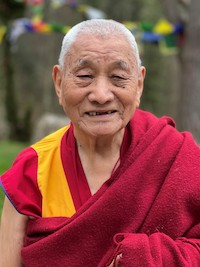 The Ven. Lama Gendün Gyatso, Sakya, was born in Markham/East Tibet. As a child he learnt to read and write with a Lama living in retreat. At the age of eleven he joined Dechen Tenphel Ling Monastery where he learnt Buddhist scriptures by heart and received an education in rituals and Buddhist chants. Five years later he was sent to the main Sakya Monastery. Under the guidance of the Abbot of Sakya he studied the dialectic scriptures Rigter, Prajna Paramita, Domsum and the writings of Sakya Pandita until he had to flee from Tibet to India after the invasion of the Chinese in 1959. He continued his studies with a thousand other monks of all four traditions in Buxor/North India. In 1969 he went to the Central Institute of Higher Tibetan Studies in Varanasi, where he received the degree of Acharya (spiritual master) with distinction. He then joined the Sakya Centre in Rajpur as a teacher. Upon the wish of H.H. Sakya Trizin he went to Switzerland in 1979 and became member of the monks’ community of the monastic Tibet Institute, where he continues living today, giving teachings to Tibetans and interested western people.
Ven. Geshe Lobsang Phuntsok
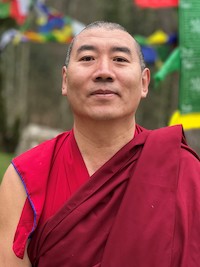 Year of birth: 1981
Place of birth: Tibet
Tibetan tradition: Gelug
Monastery in India: Gaden Shartse Monastery, Mundgod
Monastic degree: Geshe Lharampa
Admission to Rikon Monastery: 2019
Ven. Geshe Samdup Tsering
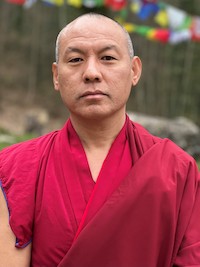 Year of birth: 1976
Place of birth: Bylakuppe, India
Tibetan tradition: Gelug
Monastery in India: Sera Mey Monastery, Bylakuppe
Monastic degree: Geshe
Admission to Rikon Monastery: 2019
Ven. Acharya Sonam Gyatso
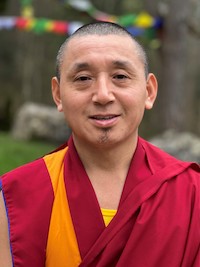 Year of birth: 1975
Place of birth: Markham, Tibet
Tibetan tradition: Sakya
Monastery in India: Sakya Centre, Dehradun
Monastic degree: Acharya
Admission to Rikon Monastery: 2021
Ven. Khenpo Tsultrim Dawa
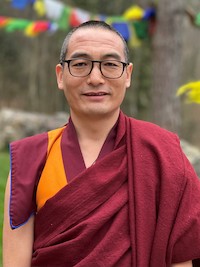 Year of birth: 1984
Place of birth: Godscho, Tibet
Tibetan tradition: Nyingma
Monastery in India: Namdroling Monastery, Bylakuppe
Monastic degree: Khenpo
Admission to Rikon Monastery: 2022
Ven. Dorje-Lopön Tsewang Samdup
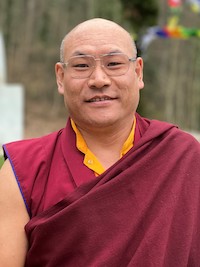 Year of birth: 1977
Place of birth: Naka Dechen, Tibet
Tibetan tradition: Kagyü
Monastery in India: Rumtek Monastery, Sikkim
Monastic degree: Dorje-Lopön
Admission to Rikon Monastery: 2023
© Tibet Institute Rikon
 Top
Top